
In this article
The short answer
Morning dress is the traditional British wedding dress code, not a requirement. In 2022, 83% of marriages in England and Wales were civil ceremonies, and Debrett's itself suggests contemporary weddings can put the men in suits and ties. A well-fitted three-piece or two-piece suit, in a colour and cloth chosen for the season, is a fully legitimate choice for the groom.
Most grooms start from the same assumption: that a wedding means a morning coat, and that anything else is a compromise. The etiquette authorities do not say that. Debrett's describes morning dress as the traditional dress for British weddings, and in the same breath offers a middle ground and a more contemporary option. This guide works through what the tradition actually asks for, why a suit fits most modern weddings, and how to choose the colour, cloth and cut - for yourself and for the groomsmen - so the result looks deliberate rather than like a morning suit that did not get ordered.
What the Tradition Actually Asks For
Debrett's is clear on the traditional form. Morning dress is the traditional dress for British weddings, and for men it means a black or grey morning coat - single-breasted, with peaked lapels - worn with a white or light-coloured shirt, a silk tie and a grey or buff waistcoat.
What is less often repeated is that Debrett's treats this as a starting point rather than a law. It notes that a middle ground may be for the principal wedding party to wear morning dress and for the guests to wear lounge suits. Its guidance for guests goes further: where a traditional wedding would mean morning dress, suits, highland dress or military uniform, a more contemporary choice might be suits and ties for the men.
In other words, the recognised British etiquette authority already allows for a wedding where nobody wears tails. The decision is about the tone of the day, not about getting a rule right or wrong. A lounge suit, in Debrett's own definition, is a suit worn with a shirt and tie - which is exactly what most alternative groomswear is.
| Option | Formality | Works best for |
|---|---|---|
| Morning dress | Highest (daytime) | Church ceremonies, traditional country weddings |
| Three-piece suit | High | Any season; the waistcoat keeps the look formal once the jacket comes off |
| Two-piece suit | Medium to high | Civil ceremonies, city venues, smaller weddings |
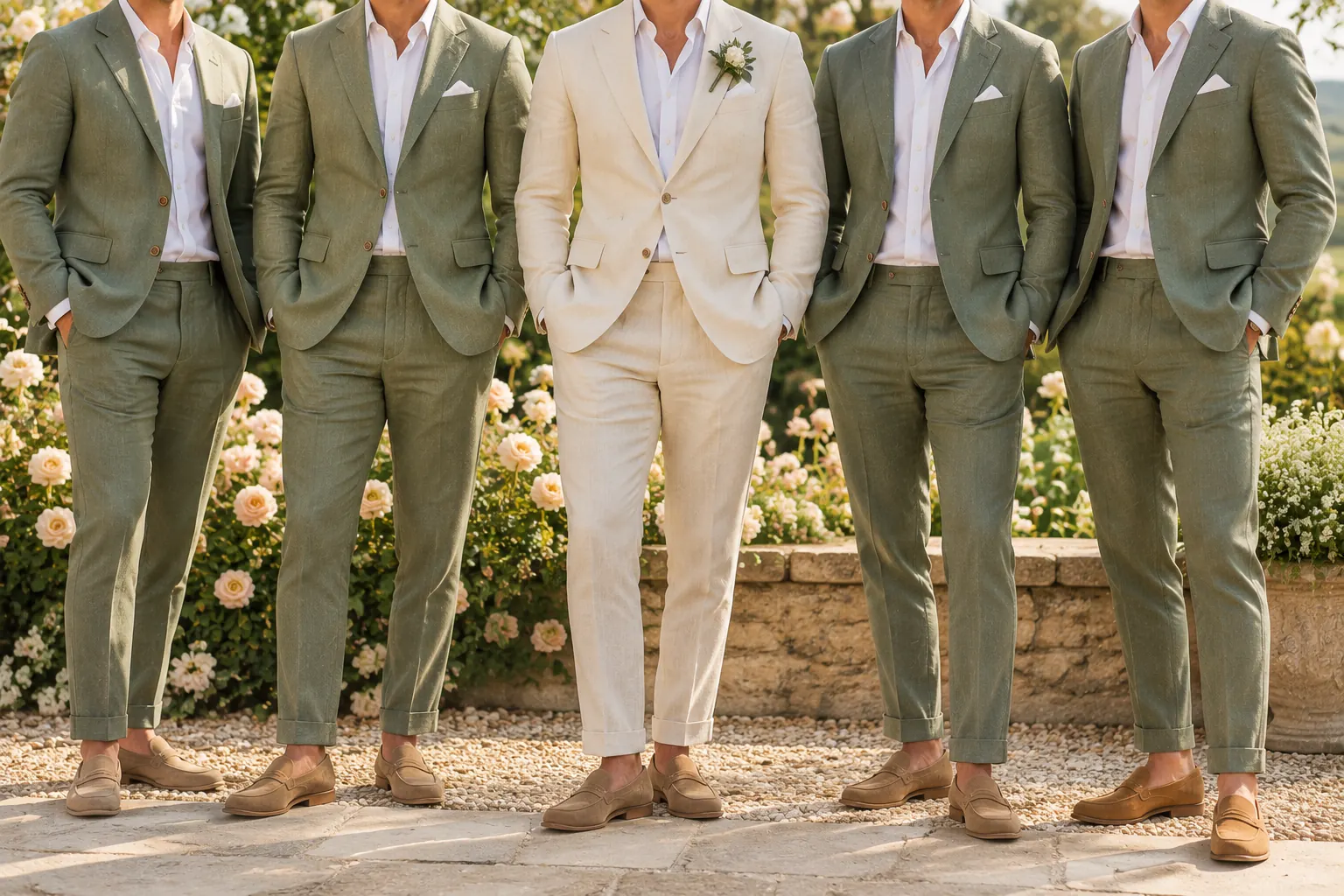
| Linen or linen-blend suit | Relaxed | Summer gardens, outdoor and destination weddings |
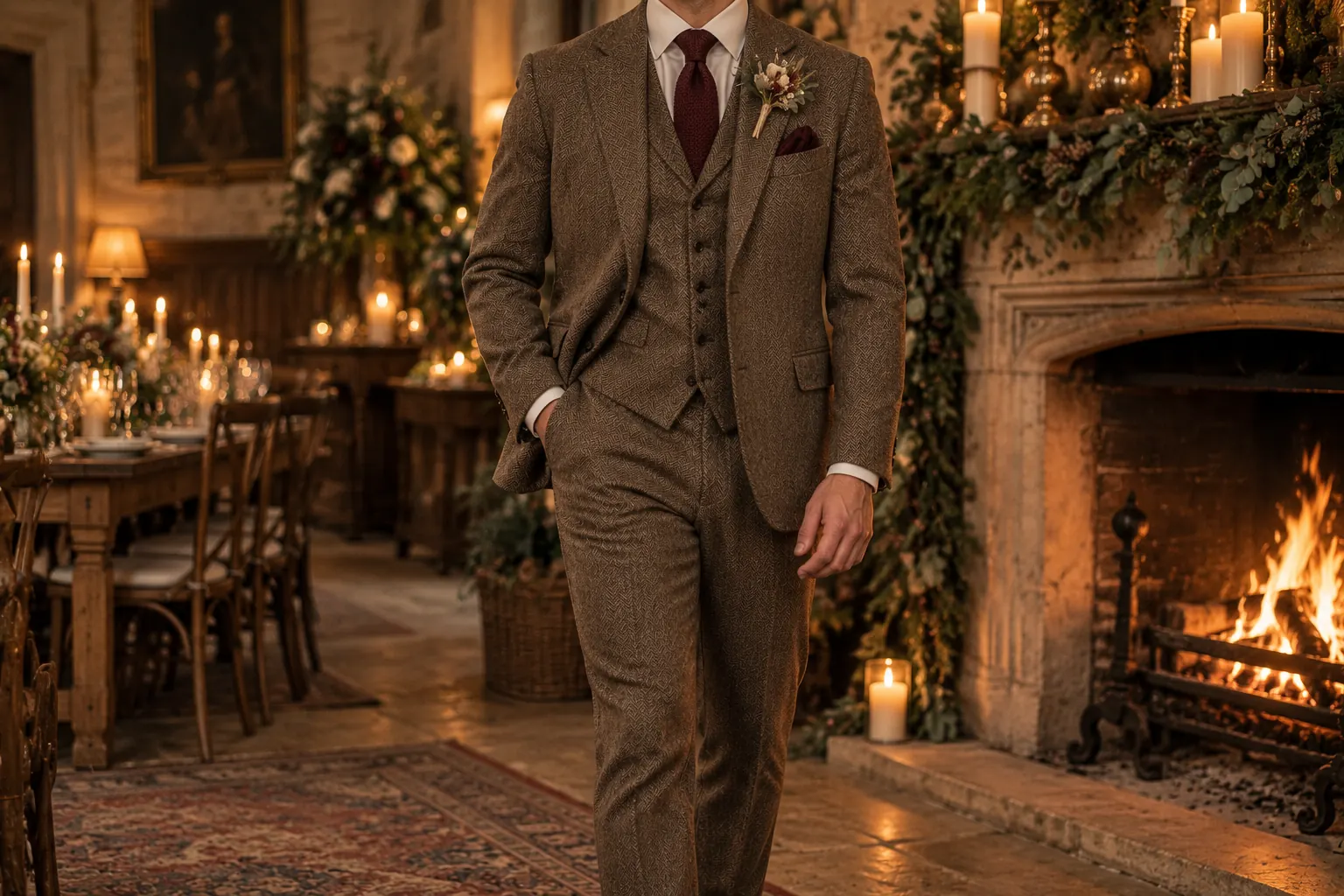
| Tweed or flannel suit | Medium, textured | Autumn and winter, country houses and barns |
Why a Suit Fits Most Modern Weddings
The strongest argument for a suit is simply what British weddings now look like. The Office for National Statistics counted 246,897 marriages in England and Wales in 2022, and 83.0% of them were civil ceremonies - only 17.0% were religious.
Morning dress grew up alongside the formal daytime church wedding. When more than four in five weddings are civil ceremonies, the default setting has shifted, and the case for defaulting to the most formal daytime dress code shifts with it. That is a judgement, not a rule - plenty of civil weddings are highly formal - but it explains why a suit so rarely looks out of place.
Timing matters too. ONS reports that Saturday is by far the most popular day to marry, with 43.6% of 2022 marriages, and that in recent years the last Saturday in July or the first Saturday in September has tended to be the single busiest date; in 2022 it was Saturday 30 July, with 3,608 marriages. A large share of weddings therefore fall in late summer, which makes cloth weight as important a decision as colour.
Sources: Office for National Statistics
Choosing a Colour That Still Reads as Groomswear
Colour is where alternative groomswear earns the name. The practical test is simple: the groom should be the most considered-looking man in the room, not the loudest. A colour works when it is rich enough to look chosen and quiet enough to photograph well for decades.
 Illustrative image
Navy
The safest alternative to morning dress. It flatters most skin tones, suits every season and is the suit you will actually wear again afterwards.
Mid or light grey
The closest in spirit to morning dress, since grey is already part of that tradition. Works well for daytime and spring or summer weddings.
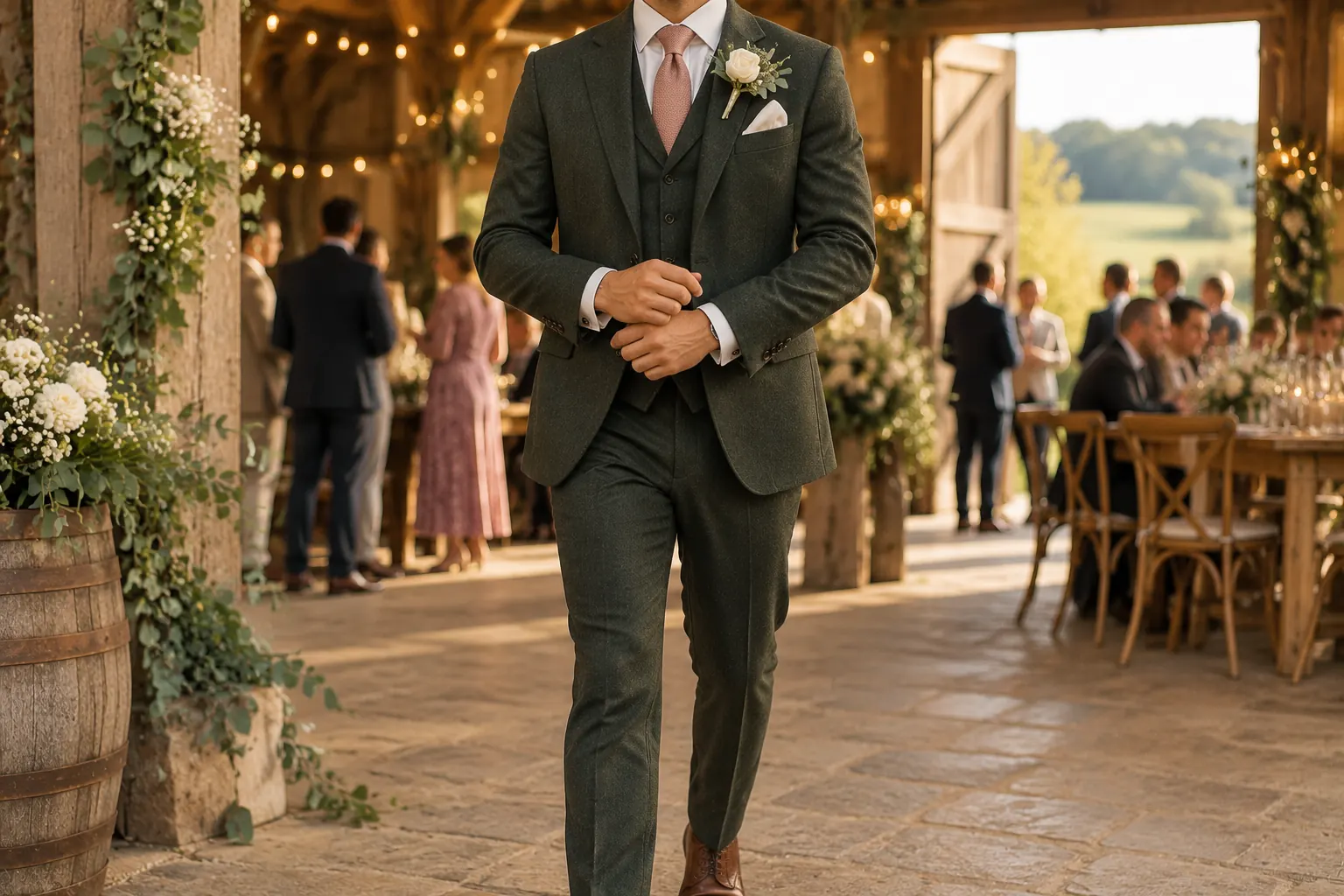
Green
Forest, bottle and sage greens have become the signature alternative colour. Deeper greens suit autumn and country venues; sage suits summer gardens.
Brown, tan and stone
Warm and relaxed. Tobacco and brown read well in tweed or flannel for colder months; stone and sand suit linen in summer.
Ivory or cream
A bold, summery choice best kept to the groom alone, so he stands apart from the groomsmen in photographs.
Summer Weddings: Linen and Lighter Cloth
For a July or early-September wedding, and especially one held outdoors, the cloth decides whether you are comfortable at the evening reception. Linen and linen blends breathe well and are meant to crease a little; accept that the creases are part of the look, or choose a wool-linen blend that holds its shape better.
Unlined or half-lined jackets are cooler again, because they remove a layer of lining against the shirt. If you want a waistcoat for the photographs, choose one that works on its own once the jacket comes off in the afternoon heat.
The same weight logic from our summer wedding guide applies to the groom: lighter cloth, a softer construction and shoes that cope with grass.
 Illustrative image
Autumn and Winter Weddings: Tweed and Flannel
Colder months open up the textured cloths that suit alternative groomswear best. A tweed or flannel three-piece looks rich in photographs, keeps you warm between the ceremony and the reception, and suits country houses, barns and candlelit venues.
If you are specifically buying Harris Tweed, it is worth knowing that the name is protected in law. The Harris Tweed Authority, a statutory body set up under the Harris Tweed Act 1993, defines it as cloth handwoven by islanders at their homes in the Outer Hebrides, finished in the Outer Hebrides, and made from pure virgin wool dyed and spun in the Outer Hebrides. Anything else sold under the name is not Harris Tweed.
Flannel is the smoother, more formal alternative - better if the venue is a city hotel rather than a country estate. Our winter tailoring guide explains the difference between the two cloths and the weights that actually keep you warm.
 Illustrative image
Sources: Harris Tweed Authority, UK Public General Acts (legislation.gov.uk)
Dressing the Groomsmen Around the Groom
An alternative look only works if the wedding party looks planned. The simplest structure is one colour for the groomsmen and one clear point of difference for the groom.
- 1
Fix the groom first
Choose the groom's suit before anything else, then build the party around it. The groom's outfit should be the reference point, not the average.
- 2
Give the groom one difference
A different colour, a waistcoat the others do not wear, or a different tie. One clear difference is enough; three looks like a costume.
- 3
Match cloth weight across the party
A groom in linen next to groomsmen in heavy wool looks mismatched in photographs and leaves someone too hot or too cold.
- 4
Let ties and buttonholes carry the colour
If the suits are neutral, the wedding colours can go into ties, pocket squares and buttonholes - cheaper to change and easier to coordinate.
- 5
Order early enough for alterations
Allow time for every member of the party to have sleeves and trouser hems adjusted. Fit matters more than price, and tailors get busy in peak wedding season.
Frequently Asked Questions
Does the groom have to wear a morning suit?
No. Debrett's describes morning dress as the traditional dress for British weddings, but it also suggests a middle ground where only the principal wedding party wears morning dress, and says a more contemporary choice might be suits and ties for the men. A well-fitted suit is a fully acceptable choice for the groom.
What colour suit should a groom wear instead of a morning suit?
Navy and mid-grey are the safest, since they suit every season and most skin tones. Green has become the signature alternative colour, with deeper greens for autumn and sage for summer. Brown and tan work well in tweed or flannel for colder months, and ivory or cream suits a summer groom who wants to stand apart from the groomsmen.
Should the groom wear a three-piece or a two-piece suit?
A three-piece is the more formal choice and is practical: once the jacket comes off at the reception, the waistcoat keeps the look finished. A two-piece suits smaller, more relaxed or very hot weddings. Either works; choose one and have every member of the party follow the same structure.
Is a linen suit formal enough for a wedding?
For a summer, outdoor or destination wedding, yes. Linen is more relaxed than worsted wool and will crease, so it suits garden and beach settings better than a formal city ceremony. A wool-linen blend is a good compromise if you want the breathability with fewer creases.
Should the groomsmen match the groom?
Usually the groomsmen match each other and the groom has one clear point of difference - a different colour, a waistcoat, or a different tie. Keep the cloth weight consistent across the whole party so nobody is too hot or too cold, and so the suits sit well together in photographs.
What makes Harris Tweed different from other tweed?
Harris Tweed is protected by the Harris Tweed Act 1993 and policed by the Harris Tweed Authority. It must be handwoven by islanders at their homes in the Outer Hebrides, from pure virgin wool dyed and spun in the Outer Hebrides, and finished there. Other tweeds can be excellent cloth, but they cannot legally be sold as Harris Tweed.
Conclusion
Choosing not to wear morning dress is not a break with etiquette - it is a choice the etiquette already allows for. Decide on the tone of the day, pick a colour that looks chosen rather than loud, match the cloth to the season, and give the groom one clear difference from his groomsmen. Get the fit right on everyone, and a suit will look every bit as deliberate as a morning coat.
References
- Good Morning: variations on the traditional wedding suit — Debrett's
- How to be a great wedding guest — Debrett's
- Addressing the Dress Code — Debrett's
- Marriages in England and Wales: 2021 and 2022 — Office for National Statistics, 2024
- Harris Tweed Act 1993 (c. 11) — UK Public General Acts (legislation.gov.uk), 1993
- Our Role — Harris Tweed Authority
Alexander West writes the wedding and occasionwear guides for Search For Suits. He works from published etiquette guidance such as Debrett's and from official data such as the ONS marriage statistics, and separates what a dress code actually requires from what is simply habit.