In this article
- Introduction
- A Choice, Not a Rule
- The Flat (TV) Fold: For Business and Black Tie
- The Puff: For Weddings and Social Occasions
- Point Folds: The Middle Ground
- Linen, Silk or Cotton: How the Fabric Changes the Look
- Which Square for Which Occasion
- Echo the Tie, Do Not Match It
- Frequently Asked Questions
- Conclusion
The short answer
A pocket square is a choice, not a rule: Debrett's defines lounge-suit dress by the suit, shirt, tie and shoes, and says nothing about the breast pocket. Wear one to add a controlled point of colour - a flat white linen fold for business and black tie, a softer silk puff for weddings and social events - and echo the tie rather than matching it.
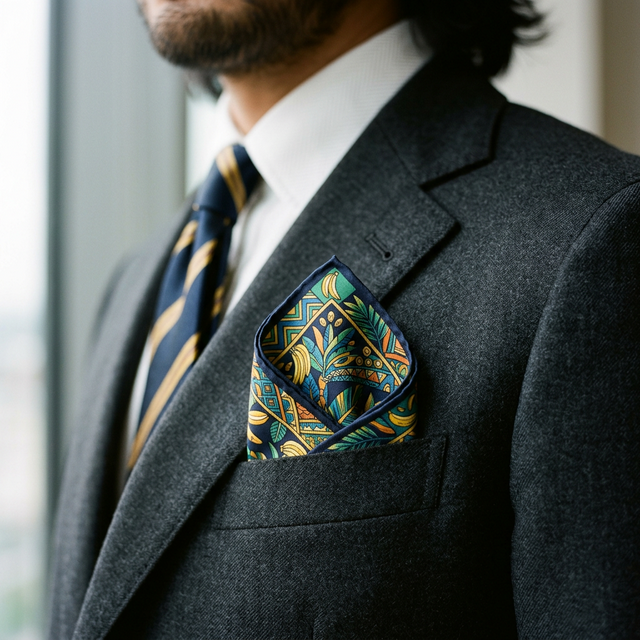
The pocket square is the smallest decision in a suit and one of the most visible. It sits at chest height, right next to the face, in every photograph. Done well it makes a plain suit look considered; done badly it looks like a novelty accessory. This guide keeps it practical: what the etiquette actually requires (very little), the three folds worth learning, how the fabric changes the result, and which combination to reach for at a wedding, an interview or a black tie dinner. Almost everything below is styling convention rather than rule - we say so where that is the case.
A Choice, Not a Rule
Start with what the dress codes actually say. Debrett's defines "lounge suits" - the code on most invitations to business events, weddings, christenings and dinners - as a suit worn with a shirt and tie, and describes it for men as a dark or grey suit, collar and tie, with formal, polished black shoes. There is no mention of a pocket square.
Its guidance on morning dress for weddings is the same: a morning coat, a white or light-coloured shirt, a silk tie and a grey or buff waistcoat. The breast pocket is left to the wearer.
That matters because it tells you how to treat the accessory. A pocket square is never required, so it should only be worn when it adds something. If it competes with the tie, or makes a sober occasion look festive, the correct choice is an empty pocket.
The pocket square is, at heart, a handkerchief worn for display. Museum textile collections still catalogue fine examples under that name - the Victoria and Albert Museum holds a Swiss cambric handkerchief from around 1900, embroidered in white and roughly 46cm square - which is a reminder that the best squares have always been about fine cloth and finishing rather than loud pattern.
Sources: Debrett's, Debrett's, Debrett's, Victoria and Albert Museum
The Flat (TV) Fold: For Business and Black Tie
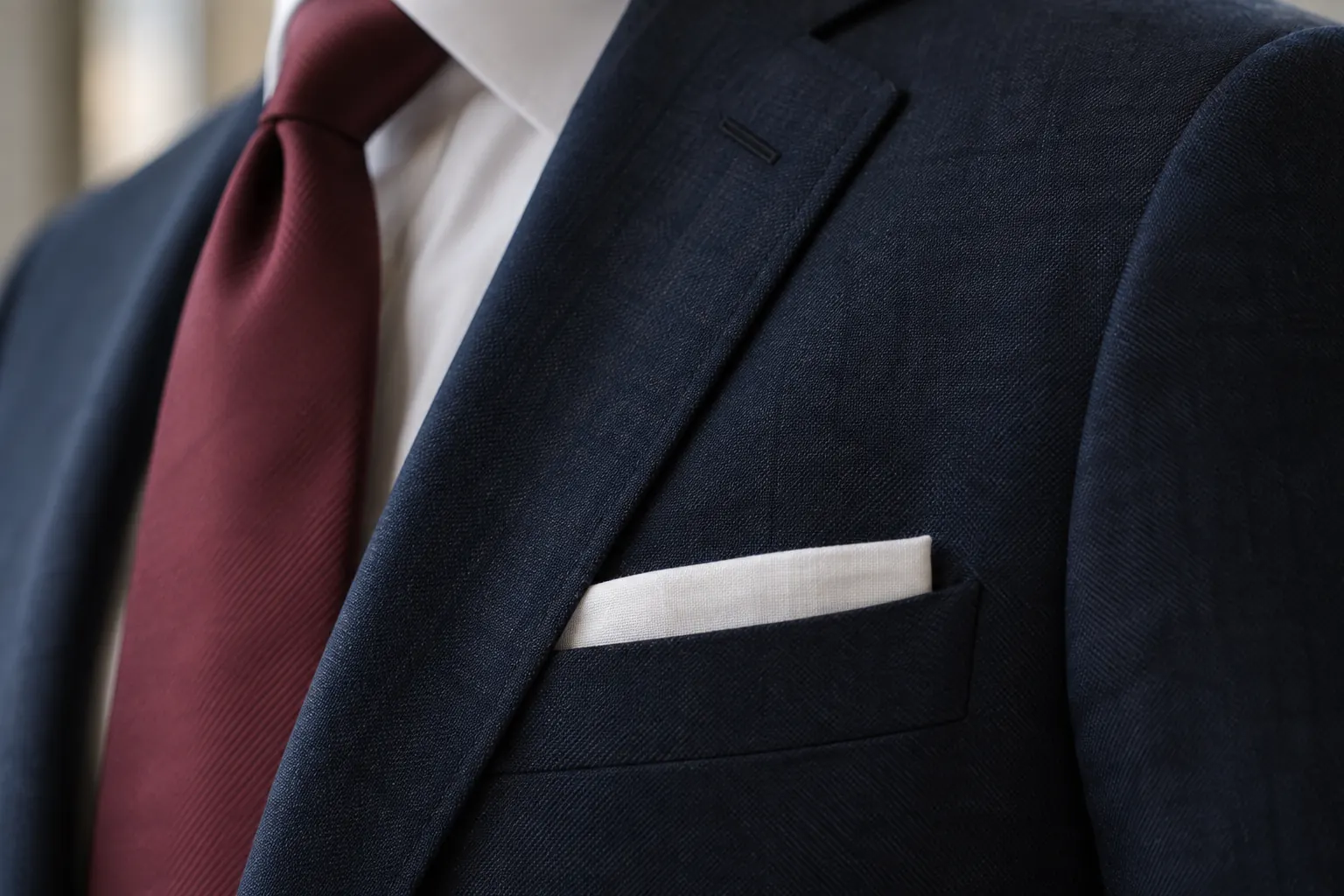
The flat fold - often called the TV or presidential fold - shows a single straight edge of cloth just above the pocket. It is the most formal and the most restrained fold, which is why it suits business meetings, interviews and black tie. In white linen, it is the one version that is correct almost everywhere.
 Illustrative image
- 1
Lay it flat
Spread the square face down and smooth it. Linen and cotton hold this fold best; silk tends to slip.
- 2
Fold in half
Fold left to right to make a rectangle.
- 3
Fold the bottom up
Fold the bottom edge up, leaving a small margin, so the folded edge will become the visible top line.
- 4
Fold to pocket width
Fold the sides in until the square is just narrower than your breast pocket.
- 5
Set the height
Slide it in with the folded edge at the top, showing about a centimetre of cloth. Keep the line parallel to the pocket.
The Puff: For Weddings and Social Occasions
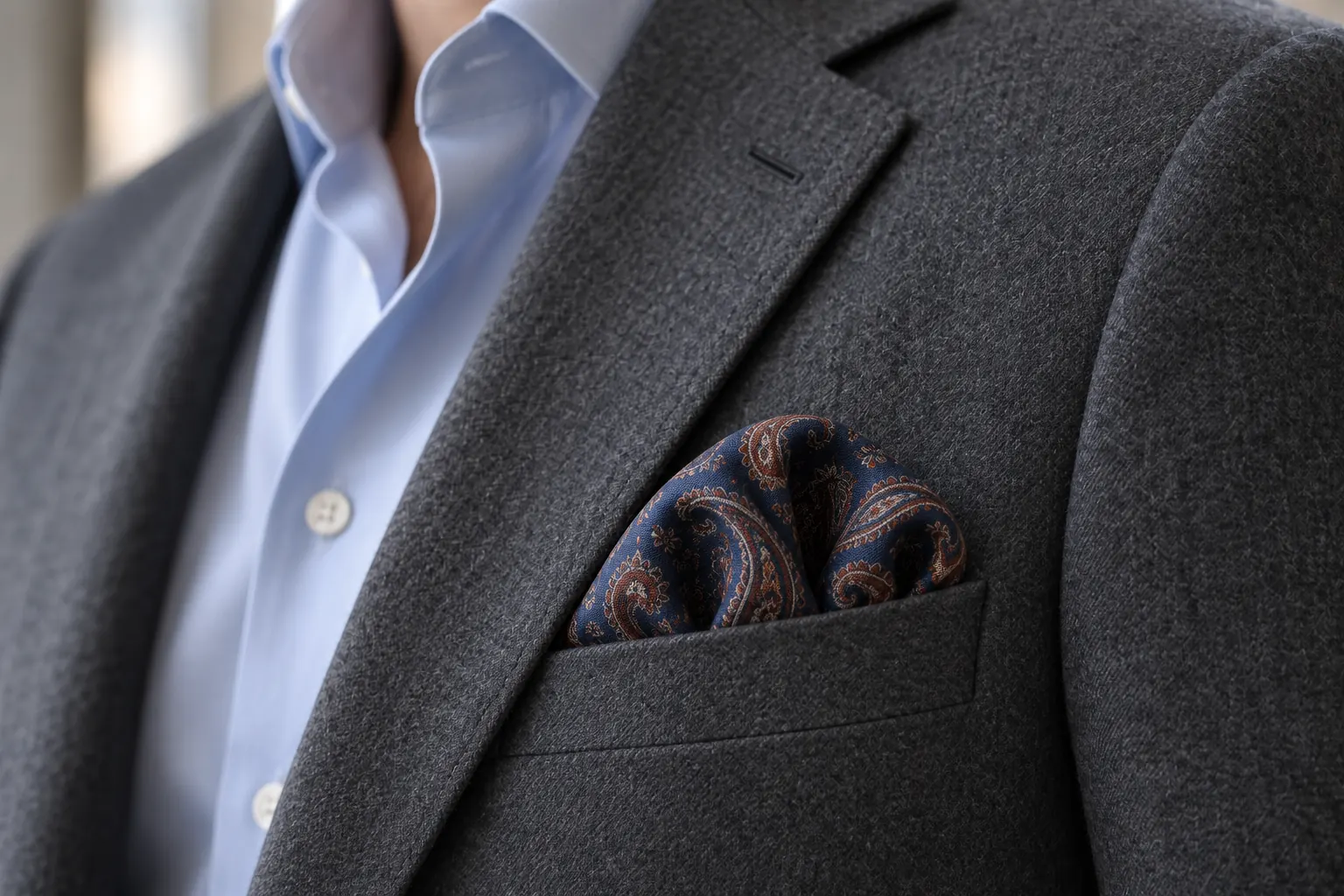
The puff is the opposite of the flat fold: soft, rounded and deliberately unstructured. It shows off silk, which is too slippery to hold a crisp fold but looks rich when it billows. That relaxed look suits weddings, parties and smart-casual tailoring better than a boardroom.
 Illustrative image
- 1
Pinch the centre
Lay the square flat and pick it up by the middle, letting the corners hang down.
- 2
Gather
Run your other hand down the hanging cloth to gather it loosely into a column.
- 3
Fold the tails under
Fold the loose corners up behind the puffed centre.
- 4
Tuck and shape
Push it into the pocket, puffed end up, then adjust with a fingertip until it looks natural rather than arranged.
Point Folds: The Middle Ground
The one-point fold - a single triangle rising from the pocket - sits between the other two in formality. It is sharper than a puff but less severe than a flat fold, and it works with most fabrics.
- 1
Start with a diamond
Lay the square flat with a corner pointing up towards you.
- 2
Fold bottom to top
Fold the bottom corner up to just below the top corner, making a triangle.
- 3
Fold in the sides
Fold the left and right corners across so the width matches your pocket.
- 4
Tuck the base
Fold the bottom up if needed and slide it in, with one point showing. Two or three points is a variation of the same fold, for a more decorative look.
Linen, Silk or Cotton: How the Fabric Changes the Look
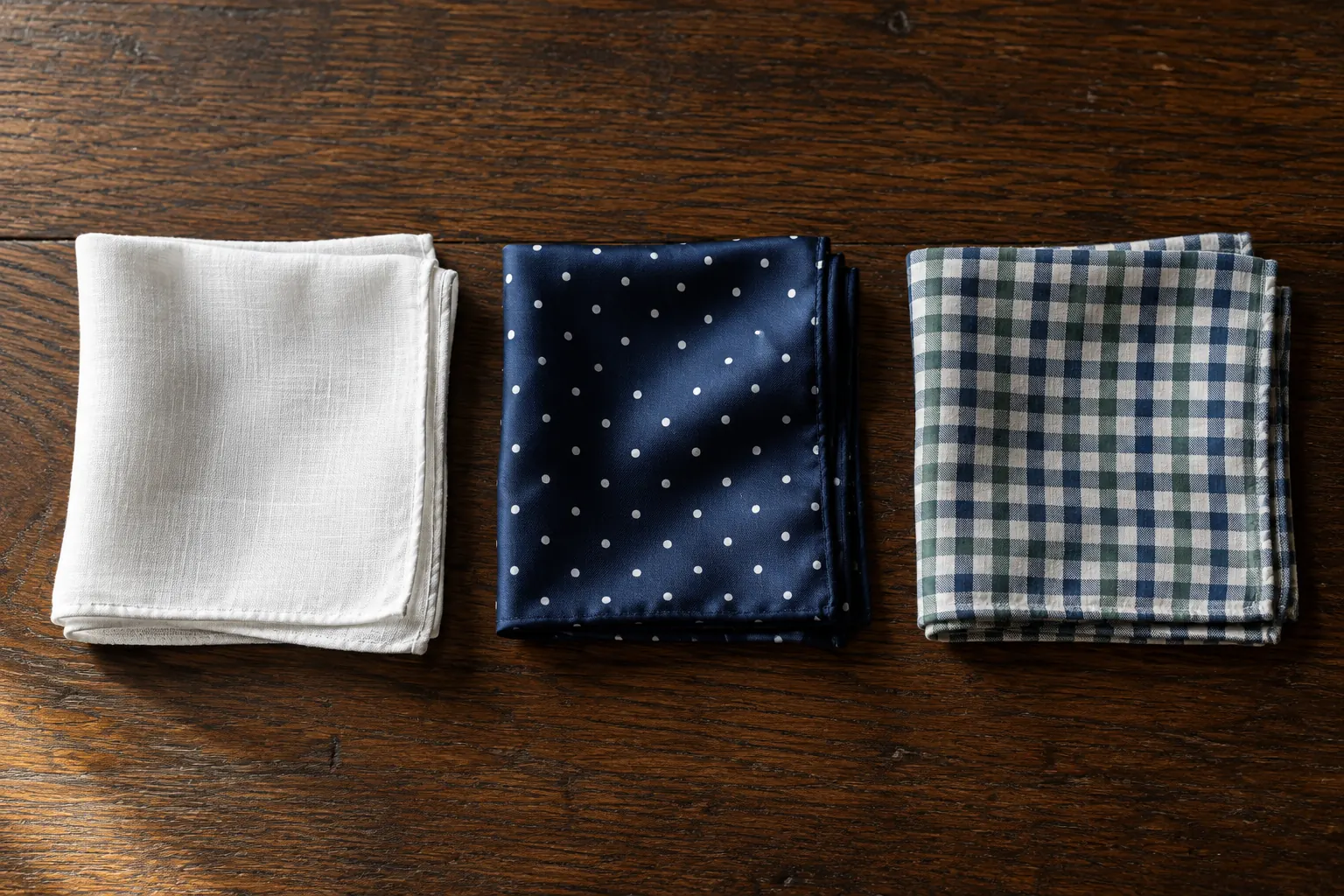
The fabric decides which folds work and how formal the result looks. As a rule of thumb, crisp matte fabrics suit structured folds, and soft glossy fabrics suit loose ones.
 Illustrative image
Linen
Matte, crisp and the classic choice for a white flat fold. It holds a sharp edge and looks right from interviews to black tie. The most useful single square to own.
Silk
Glossy and fluid. Best in a puff, where the sheen and print can show. Printed silk is the natural wedding and party square.
Cotton
Soft and forgiving. Works in most folds and suits checks and simple patterns, especially with less formal jackets and odd trousers.
Wool and cashmere
Heavier and more textured. Best kept for flannel and tweed in winter, usually in a puff or a loose point.
Which Square for Which Occasion
The simplest guide is to match the square's formality to the occasion, and to step back when the occasion is sombre. These are our recommendations, not rules - but they keep you on the safe side of every one of them.
| Occasion | Suggested square | Why |
|---|---|---|
| Job interview | White linen, flat fold - or none | Neat and quiet; nothing competes with you |
| Business meeting | White or pale blue, flat fold | Adds polish without looking festive |
| Wedding guest | Printed silk or linen, puff or point | The occasion invites colour |
| Groom or groomsman | Coordinated with the wedding colours | Ties the party together in photographs |
| Black tie | White linen or silk, flat fold | Classic, and never wrong with a dinner jacket |
| Funeral | Plain white flat fold, or none | Respectful and understated |
Echo the Tie, Do Not Match It
The most common mistake is buying a tie and pocket square cut from the same cloth. It looks like a gift set. The better approach is to let the square pick up a secondary colour - from the tie, the shirt or the suit - in a different pattern and scale.
Pick a minor colour
A burgundy tie with a small navy pattern works with a navy-bordered white square, not a second burgundy one.
Change the scale
A tie with a small, dense pattern pairs well with a larger, looser print in the pocket, and vice versa.
When in doubt, white
A plain white square goes with every tie, every shirt and every suit colour.
Keep it in the pocket
Show a little cloth, not a bouquet. The square should look like a finishing detail, not the centrepiece.
Frequently Asked Questions
Is a pocket square required with a suit?
No. Debrett's defines lounge-suit dress as a suit with a shirt and tie and polished black shoes, and its morning-dress guidance lists coat, shirt, tie and waistcoat - neither requires a pocket square. It is an optional finishing detail.
Should my pocket square match my tie?
No - it should complement it. An identical tie and pocket square looks like a boxed set. Pick up a secondary colour from the tie or shirt in a different pattern or scale, or wear plain white, which goes with everything.
What is the most formal pocket square fold?
The flat fold, also called the TV or presidential fold: a single straight line of cloth showing just above the pocket. In white linen it is the classic choice for business, interviews and black tie.
Can I wear a pocket square to a job interview?
You can, but keep it quiet: a white linen square in a flat fold. If you are unsure, leave it out. The suit, the fit and the tie matter far more in an interview than the breast pocket.
What pocket square goes with black tie?
White linen or white silk in a flat fold is the classic, safe choice with a dinner jacket. It reads as formal and never clashes with a black bow tie.
Which fabric is best for a pocket square?
Linen for crisp folds and formal wear, silk for soft puffs and colourful prints, cotton for everyday patterns, and wool or cashmere for winter tailoring. If you only own one, make it white linen.
Conclusion
A pocket square is optional, which is exactly why it is worth doing well. Own one white linen square for the flat fold and you are covered for business, interviews, black tie and funerals. Add a printed silk for weddings and a cotton or wool square for weekend tailoring. Choose the fold to match the formality of the day, echo the tie rather than copying it, and when the occasion calls for restraint, leave the pocket empty.
References
- Addressing the Dress Code — Debrett's
- Deconstructing Dress Codes — Debrett's
- Good Morning: variations on the traditional wedding suit — Debrett's
- Handkerchief (Swiss, ca. 1900) - Explore the Collections — Victoria and Albert Museum
James Sterling covers business and everyday tailoring for Search For Suits. He grounds workplace dress advice in published sources - UK government guidance, Debrett's, and survey data from YouGov and the ONS - and keeps the difference between a rule and a preference explicit.